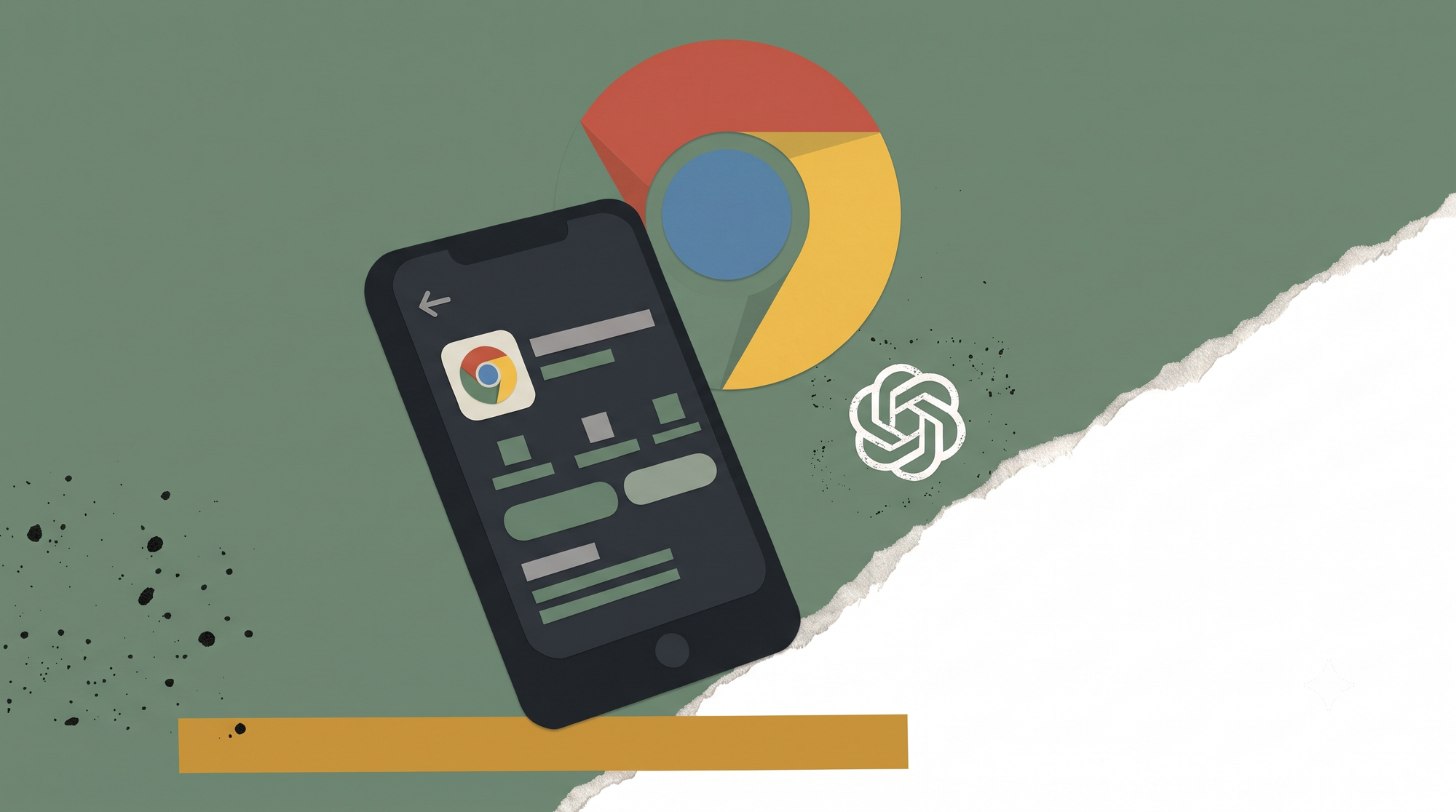

On August 24, Cato Networks reported a campaign that bought sponsored search results for queries such as “codex macos download.” The ads appeared above OpenAI’s own listing and led to a fake download page. That page led visitors to open Terminal and paste an install command. The command seemed like a normal Codex installation line, but instead fetched a remote script that downloaded and ran a malicious Mac binary.
No exploit ran at any point, because the user typed the infection step. The page asked for exactly what a developer expects to do when setting up a new tool. And Cato also found, according to its report, a similar Claude Code lure that it assesses as likely related.
Welcome to Issue 07 of InfoSec Leadership by InfoSec Relations, featuring Brandon Dixon, co-founder and CTO of Ent. He founded PassiveTotal, led product and strategy at RiskIQ through its acquisition by Microsoft, and helped bring Security Copilot to market.
Let’s get started.

Attackers Prefer the Easy Way In
A threat intelligence founder and CTO on why human risk outlasts every new exploit.
Listen to the Full InterviewDixon has watched that pattern from both ends. He began his career helping build a lab that simulated the internet inside a SCIF, so US operators could test their tools before reaching a target. He then tracked state-sponsored operations in the private sector, founded PassiveTotal, and later helped bring Security Copilot to market at Microsoft. His verdict on how attackers use people after 15 years is blunt. "For better or for worse, it really hasn't changed too much," he offers.
Lures now ask users to run the attack themselves
Sandboxing and other defenses have made software harder to exploit, so top exploits for phones and widely used software now sell for millions of dollars. Attackers have moved to cheaper routes that need no exploit at all. "But adversaries are much like developers. They try to find the path of least resistance," Dixon observes. He groups today's lures as variants of ClickFix, schemes that coax a user into running a command, scheduling a job, or installing software.
No malicious link has to appear, and nothing on the endpoint gets exploited. "It's using the capabilities of the endpoint or the software that the enterprise already has, and it's effectively opening a door to someone external to the business," he explains. The pattern he hears about most right now involves developers who copy commands from malvertizing pages and run them in PowerShell. He expects AI agents to fall for the same lure when they pull context from poisoned search results.
The command may even deliver what the user wanted. In Dixon's walkthrough, it also schedules a job that downloads code from an untrusted source three days later and puts a dropper on the machine. "It's meant to exploit a workflow that otherwise is achieving an outcome that the person wants, but it has some unintended consequences once they execute it," he notes.
So publish approved install sources for the AI tools your developers use, and tell them never to install from a sponsored search result. Then watch for terminal and PowerShell sessions from people who rarely open either one.
AI makes research cheaper for social engineers
Polished phishing does not mean personal targeting, in Dixon's view. "A poorly written email can now be polished with AI, and the way in which it's being crafted is not going to go against any sort of AI safety or guardrails," he points out. He receives messages that impersonate his CEO and long-standing partners, and they fall apart as soon as he engages with them.
The change he expects is in reconnaissance. He points to groups such as Scattered Spider that call help desks and IT teams and talk staff into handing over information or access. "These are not particularly sophisticated, but someone with the help of AI could do a lot more research about the target they're going after," he cautions.
So assume any attacker can now build a detailed profile of your help desk staff, executives, and finance team. Reduce what those roles expose publicly, and require out-of-band verification for every reset or payment request that arrives by phone.
Visibility matters more than spotting bad grammar
Awareness training teaches people to look for bad grammar, odd sender addresses, and false urgency, and AI removes most of those signals. Dixon starts with digital hygiene, such as locking down profiles that expose personal detail. For organizations, he puts the weight on visibility into the surfaces attackers target, including call centers and contractor workstations.
Call center conversations are usually recorded, and he has heard of teams that pulled those recordings after a social engineering attempt to hear exactly how the attacker worked. A recording shows only half the picture, though. Dixon wants it read alongside what the employee did next, so a call about a financial exchange followed by access to sensitive records stands out. "If you don't have coverage in those respective areas, you're basically blind, and you're just hoping that people are going to be able to discern this," he warns.
So connect call center and help desk records to the access logs for the same staff. Flag any session in which a conversation about money or credentials comes before access to data that person does not normally touch.
Speed may replace stealth in AI-assisted attacks
Human operators today give up speed to stay hidden. They live off the land, compromise identities, and blend in as employees, which limits how many targets they can manage at once. Dixon expects AI to reverse that trade. "You're going to be trading stealthiness for speed and effectiveness," he predicts.
A fast attack may be noisy, but noise matters only if someone can act on it in time. "Yes, it's noisy, but it happened within 10 seconds, and so by the time the noise even registered, the damage was already done," he says. In his view, a program that sends endpoint data to the cloud and waits for a human to approve a response cannot close that window.
So measure how long your current stack takes to move from a malicious action on an endpoint to an enforced block. Any step that depends on a cloud round trip or a human click belongs on the list of things an AI-speed attack can outrun.
Knowing normal behavior can interrupt a lure
Social engineering has outlasted every technical shift Dixon has seen, and he ties its staying power to how little organizations know about their own behavior. "You could go to a CISO and you could say, 'Who are your riskiest users?' And they probably can't tell you," he argues. Large businesses run on hundreds of people making small decisions, and few security teams can describe those workflows in any detail.
Earlier behavior analytics tools tried to model this with statistics and flagged anomalies such as late-night work. "I think what those solutions suffered from was they had no semantic understanding," Dixon adds. In his view, current AI models read language well enough to understand what a developer, an analyst, or an HR manager actually does all day.
Applied to a ClickFix lure, that understanding creates several chances to intervene. A user visits a site that nobody in the company has seen, and the page asks them to change their system. The clipboard then fills with a command that fetches remote code, and the user opens a terminal they rarely use. Each step is unusual for that person, and together they justify stopping the action or explaining the risk in plain language before the user presses enter. This is the approach Dixon's company builds toward, and we include it as one answer rather than a recommendation.
So ask any behavioral tool you evaluate how it describes a person's job, beyond their login times. A tool that cannot tell a developer from a finance analyst risks repeating the false positives that undercut earlier behavior analytics tools.
Prevention starts with removing unused attack surface
Dixon traces the move toward prevention to a habit older than AI, which is digital hygiene. Attack surface management, the work he did at RiskIQ, removed exposed services before attackers could use them. He recalls an analyst who kept finding the CUPS print service running on client systems, unused and vulnerable. Clients refused to switch it off, afraid of disrupting someone's work. "That in and of itself is, to me, a stark reminder that businesses don't understand how their operations are actually working," he reflects.
Application control applies the same logic to tools that attackers abuse, such as TeamViewer and AnyDesk. Only a few people need them, so blocking them for everyone else removes a whole class of lures that ask a user to install remote access software. AI adds urgency, since an autonomous agent inside the network could act faster than any reactive control. Dixon backs adopting AI while accepting its limits. "This is new tech. We don't know the new ways in which it could be exploited yet," he acknowledges.
So list the remote monitoring and management tools approved in your environment, and block every other one from running. Then pick one legacy service that nobody claims, turn it off in a test group, and see whether anyone notices.
Destructive actions need a second approver
Dixon worries that, at most organizations, one compromised administrator could erase the entire device fleet. "There was a case, I think it was attributed back to Iran, where they deleted some insane amount of servers by just going into Intune and wiping them," he recalls. Medical technology company Stryker disclosed a global disruption to its Microsoft environment in March and reported no indication of ransomware or malware. Intune already offers multi-admin approval, which holds a wipe, retire, or delete until a second administrator approves it.
The workflow itself is the weak point, since a single identity can trigger the action alone. "Something as simple as a two-person approval for destructive actions, especially ones that deviate from the norm," Dixon proposes. A wipe request enters a queue, and a different identity, ideally in another part of the organization, approves it with a written reason. He also likes the type-to-confirm prompts some applications now require before a deletion, which refuse copy and paste. "It's an opportunity to disrupt the cognitive thinking," he notes.
So turn on multi-admin approval in Intune and in every other platform that can wipe, delete, or reimage at scale. Apply the same rule to bulk deletions in cloud storage and identity systems.
More point solutions will not fix the program
Security leaders keep adding a tool for each gap they find, and Dixon sees that habit as part of the problem. A large enterprise may run 80 products that do not work together, and attackers exploit the seams between them. "But I don't think that just adding more and more point solutions to your arsenal is what you need," he contends.
He would put budget into the program as a whole, favoring platforms that consolidate point products over another tool labeled AI security. He puts one question to any AI security point product, which is whether it addresses the underlying problem the business faces. "My short answer to that would be absolutely not," he says.
So before the next AI security purchase, write down the specific attack it would stop and which existing control already covers part of it. If the answer depends on a new integration, budget for the integration first.
Most compromises still come through mundane gaps
Tracking state actors early in his career shaped what Dixon feared most. "And it made me lose sight of the fact that organizations get compromised in really, really simple ways," he admits. A well-funded state adversary will still reach a chosen target, in his view, and some exposure, such as an upstream provider, is beyond any one organization's control.
Most compromises start closer to home, in patches that cannot be deployed and services nobody dares remove. "Very rarely is it something extremely sophisticated," Dixon observes. Attackers want results, and they rarely spend effort they do not need. "They're lazy. They just want to do whatever's going to work, and if that makes them money, great," he concludes.
CISO Action Plan
Most compromises still begin with a person doing something that looks like work. Here is what to settle now.
- Publish approved install sources for AI tools. Tell developers to install only from those sources. For staff who never need them, restrict PowerShell and the Run dialog, as Microsoft advises in its latest ClickFix research.
- Verify every reset and payment request out of band. Assume attackers can research help desk, finance, and executive staff in detail, and review how your help desk authenticates staff before it resets a password.
- Read call records alongside access logs. Flag staff who discuss money or credentials and then reach data they do not normally touch.
- Time your response path. Measure the gap between a malicious endpoint action and an enforced block, and list every step that waits on the cloud or a person.
- Judge behavioral tools on how they describe a job. A tool that sees only login times risks repeating the false positives of earlier behavior analytics.
- Block unapproved remote access tools. Allow TeamViewer, AnyDesk, and similar tools only for the people who need them, and use CISA's guide to securing remote access software as the baseline.
- Require a second approver for destructive actions. Turn on multi-admin approval for device wipes and bulk deletions, which Intune supports for wipe, retire, and delete.
- Tie every new purchase to a specific attack. Fund integration across existing controls before adding another point product.
Thank you for reading InfoSec Leadership.
If you found this analysis useful, please subscribe to the InfoSec Leadership newsletter so you never miss an update.
Lead with clarity, defend with purpose.
Shant Ebenezer Jena
Volunteer Host
This issue draws on InfoSec Relations' interview with Brandon Dixon, Human Risk and AI-Written Lures, with a Threat Intelligence Founder and CTO, hosted by Shant Ebenezer Jena for InfoSec Leadership. Ent did not sponsor this content.